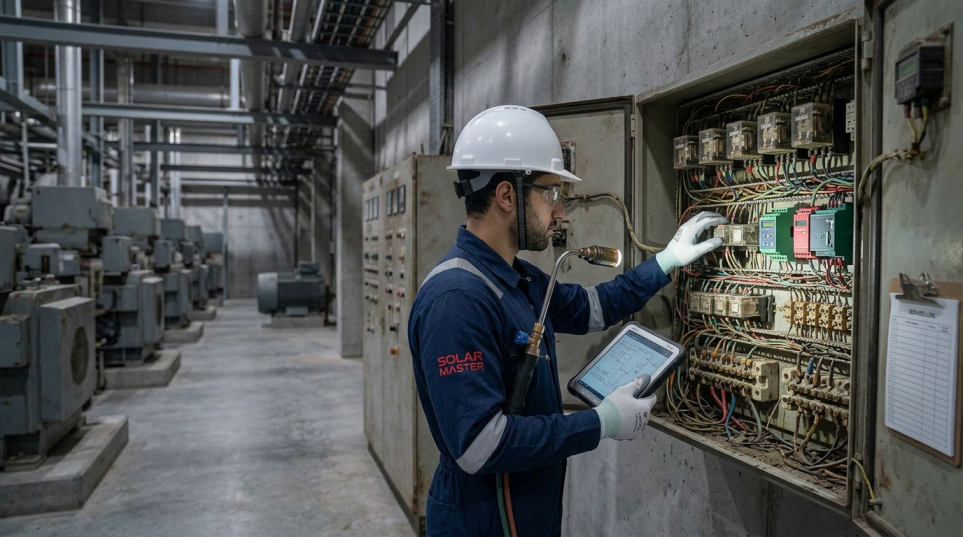

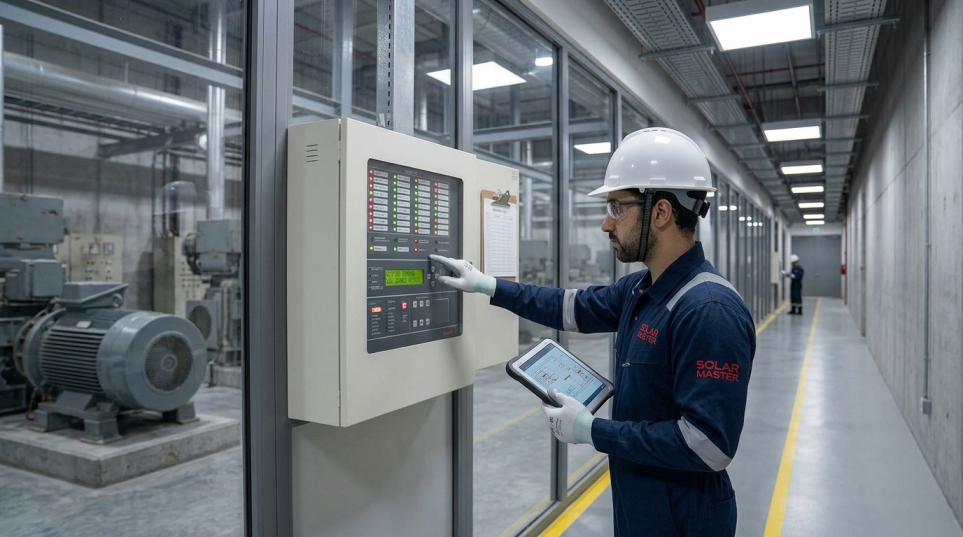
A fire alarm system is unusual among building services: when it’s working perfectly, you notice nothing at all. There’s no performance dip to alert you, no rising energy bill, no complaint from staff. It sits quietly for years, and the only real test of whether it works is the one day you desperately need it to.
That’s exactly why fire alarm systems tend to slide down the maintenance priority list — and why problems are often discovered during an inspection rather than during routine attention.
Here are five signs worth acting on before someone else finds them for you.
1. The panel shows faults you’ve learned to live with
Most fire alarm control panels will indicate a fault condition when something isn’t right — a detector not responding, a break in a circuit, a low battery on the standby supply.
The warning sign isn’t the fault itself. It’s the fault that’s been showing for weeks and has quietly become part of the scenery. Someone silences it each morning. Nobody logs it. Over time it stops registering as a problem at all.
If your panel is displaying anything other than normal status, that’s the system telling you something specific. A fault indication that’s been present long enough to feel normal is the clearest signal on this list.
2. Your building has changed but the system hasn’t
Fire alarm systems are designed around a building’s layout — where detectors sit, how zones are divided, where alarm points are reachable.
Then the building changes. A partition goes in. An open-plan floor is split into meeting rooms. A storage area becomes a workshop. Ceiling heights change during a fit-out. New racking blocks what used to be a clear path.
Each of these can affect whether detection still covers the space properly and whether zone information still points responders to the right place. If your building has been altered since the system was installed — and most buildings have — it’s worth having the coverage reviewed rather than assuming it still fits.
3. Nuisance alarms have trained people to ignore the alarm
This is the most dangerous item on the list, because the damage isn’t to the equipment.
When a system produces repeated false alarms — a detector sited too close to a kitchen, a unit affected by dust or steam, a fault causing intermittent activation — people adapt. They stop evacuating promptly. They wait to see if it stops. They assume it’s the usual one.
At that point the system has a technical problem and a behavioural one, and the behavioural one is harder to reverse. Recurring false alarms are almost always fixable, usually through resiting, replacing, or reconfiguring the affected device. They’re worth treating as urgent, not as an annoyance to be tolerated.
4. You can’t produce recent test and service records
Try this: ask for your system’s last service report and test log. If nobody’s sure where they are, or the most recent entry is older than anyone can explain, that’s a finding in itself.
Documentation matters for two separate reasons. The obvious one is that you may need to produce it — for insurers, for authorities, for a landlord or tenant. The less obvious one is that the records are how you spot patterns. The same detector failing repeatedly, or a zone that keeps throwing faults, is only visible if someone’s writing it down.
A gap in the paperwork usually reflects a gap in the attention, not just the filing.
5. Nobody knows how old the equipment is
Detectors and control equipment don’t last indefinitely. Sensing elements degrade, standby batteries lose capacity, and older panels eventually reach a point where replacement parts and technical support are no longer readily available.
The practical warning sign isn’t a specific age. It’s not knowing the age at all. If nobody in the building can say when the system was installed or when detectors were last replaced, then any assumption about its condition is a guess.
Establishing what you actually have — equipment, install dates, replacement history — is usually the first useful step, and it often turns out to be more straightforward than people expect.
What a proper service visit should cover
If any of the above sounds familiar, it’s worth knowing what to expect from a service visit. At minimum, it should include:
- Panel inspection — fault history, zone configuration, standby power condition
- Detector testing — devices tested for response, not just visually checked
- Alarm device checks — sounders and call points confirmed working across the building
- Coverage review — whether detection still matches the current layout
- A written report — what was tested, what was found, what needs attention
That last point is the one to insist on. A service visit that leaves no record behind hasn’t given you much beyond a visit.
The underlying point
Fire alarm systems fail quietly. There’s no gradual warning that performance is slipping, because there’s no performance to observe until the moment it matters.
Everything on this list is a way of getting information the system won’t volunteer — reading the faults it’s reporting, checking whether it still matches the building it’s protecting, and keeping records good enough to show patterns. None of it is complicated. It mostly requires deciding to look.
If you’d like your fire alarm system reviewed, or you’re not sure what condition it’s currently in, get in touch and we’ll take a look.