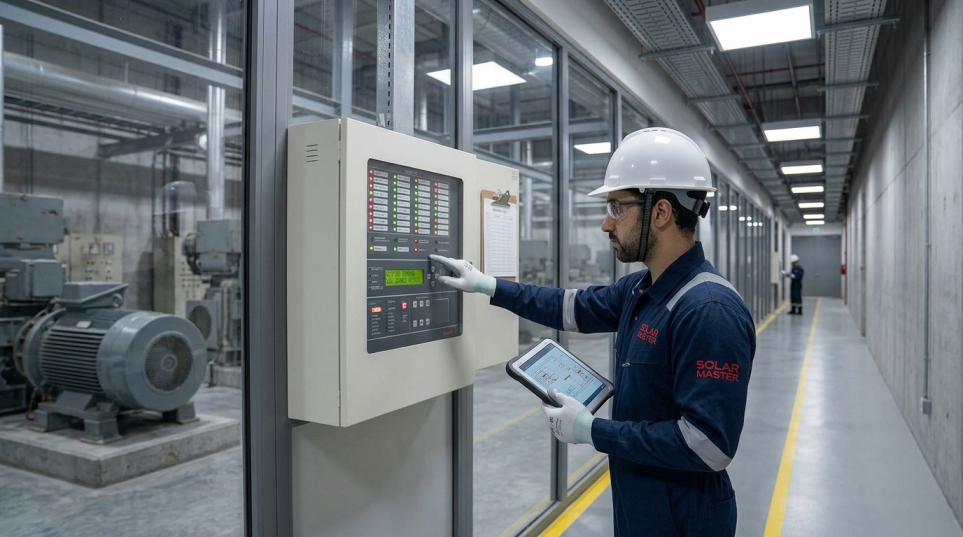

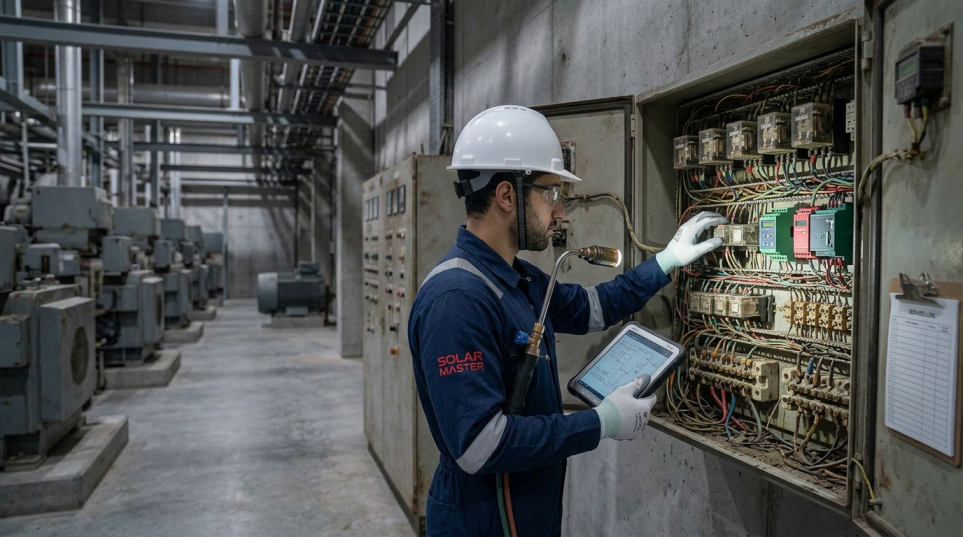
An old control panel is still running your process. It’s had a few repairs over the years, the labelling has stopped matching reality, and every time someone opens it there’s a quiet hope that nothing else has changed inside. But it works.
So the question comes up: do you keep repairing it, or do you replace it?
There’s a version of this article that argues you should always replace. It would be easier to write and better for whoever’s selling the new panel. It also wouldn’t be true. Plenty of ageing panels are perfectly sound and repairing them is the sensible commercial decision.
The useful question isn’t which option is better in general. It’s which factors actually decide it.
Repair is often the right answer
Worth saying clearly, because it gets said too rarely.
If a panel is structurally sound, its components are still available, it meets the safety requirements that apply to it, and the fault is isolated and understood — repair it. Age alone isn’t a defect. A well-built panel that’s been maintained and isn’t being asked to do more than it was designed for can run for a very long time.
Replacement is disruptive and expensive. It should be driven by a specific reason, not a general sense that the panel looks old.
The rest of this article is about identifying those specific reasons.
Factor 1: Can you still get the parts?
This is usually the first thing that genuinely forces the decision.
When components go obsolete, repair stops being a straightforward transaction. You end up sourcing from second-hand suppliers, holding your own spares, or substituting parts that aren’t quite equivalent and require rework to fit. Each repair takes longer and costs more than the last.
Ask a direct question: if the main component in this panel failed tomorrow, could we get a replacement, and how quickly? If the honest answer involves searching for old stock, you’re no longer maintaining a panel — you’re managing a countdown.
Factor 2: Does it still meet current safety requirements?
Standards and requirements move. A panel built to what was required at the time may not meet what’s expected now.
This is the factor that most often turns a “maybe later” into a “this needs doing”, because it isn’t only a technical question — it can affect compliance, insurance, and liability. It’s also the hardest to assess by eye. It generally needs someone to look at the panel against the requirements that currently apply to your facility and tell you plainly whether there’s a gap.
If there is one, that usually settles the argument. If there isn’t, age matters much less than people assume.
Factor 3: Is the panel still doing the job you need?
Panels are sized and configured for a specific load and a specific process. Facilities change.
Extra equipment gets added. Loads increase. Processes change. Modifications accumulate — a circuit added here, a spare way pressed into service there, none of it reflected in the drawings. Eventually the panel is running something quite different from what it was designed to run.
A panel that’s at or beyond its intended capacity isn’t a candidate for repair in the normal sense. Repairing it returns it to a state that no longer suits the job. That’s a replacement conversation, and it’s driven by your operation, not the panel’s age.
Factor 4: What does the fault history actually show?
One fault is an event. A pattern is information.
If you’re seeing repeated failures, especially in different parts of the panel, that often points to something systemic — heat, contamination, vibration, moisture ingress, or an underlying electrical issue that individual repairs keep treating around rather than resolving.
Two questions worth asking:
- How many separate repairs has this panel needed in the last two years?
- Were they the same fault recurring, or different faults appearing?
Different faults appearing in different places usually means the panel’s overall condition is the problem, not any single component.
Factor 5: What does the downtime actually cost you?
Cost comparisons usually stop at the quote. That’s the smaller half of the picture.
The repair option carries the risk of unplanned downtime — failures that happen when they happen, not when it suits you. The replacement option carries planned downtime, which is disruptive but scheduled, and normally shorter overall.
If unplanned downtime is expensive or dangerous in your operation, that changes the maths considerably. If it’s tolerable, it doesn’t. This is why identical panels in different facilities can reasonably reach opposite conclusions.
What an honest assessment looks at
A proper assessment should cover:
- Physical condition — enclosure, cable entries, evidence of heat, moisture or contamination
- Component availability — what’s still supported, what isn’t
- Compliance — whether the panel meets the requirements that currently apply
- Capacity — whether it still matches your actual load and process
- Modification history — what’s been changed, and whether it’s documented
- Fault history — patterns rather than individual events
You should come away knowing which specific factors are driving the recommendation. “It’s old” isn’t a finding.
Questions worth asking before you commit
Whoever assesses your panel, these are fair questions:
- Which specific factor is driving your recommendation?
- If we repair, what’s the realistic remaining service life?
- Are the parts we’d need still supported?
- Is there a compliance gap, and if so what exactly?
- What would replacement involve in terms of downtime?
- Is there a middle option — partial upgrade rather than full replacement?
That last one is genuinely worth asking. It isn’t always a binary choice. Upgrading a specific section, replacing obsolete components while retaining sound enclosure and infrastructure, or staging work across several planned shutdowns can be a sensible route.